
Gutter Cleaning Barbican
- Name the level where the water appears
- Confirm authority for shared building parts
- Describe the route from the entrance to the working position
Identifying whether this is the right service enquiry
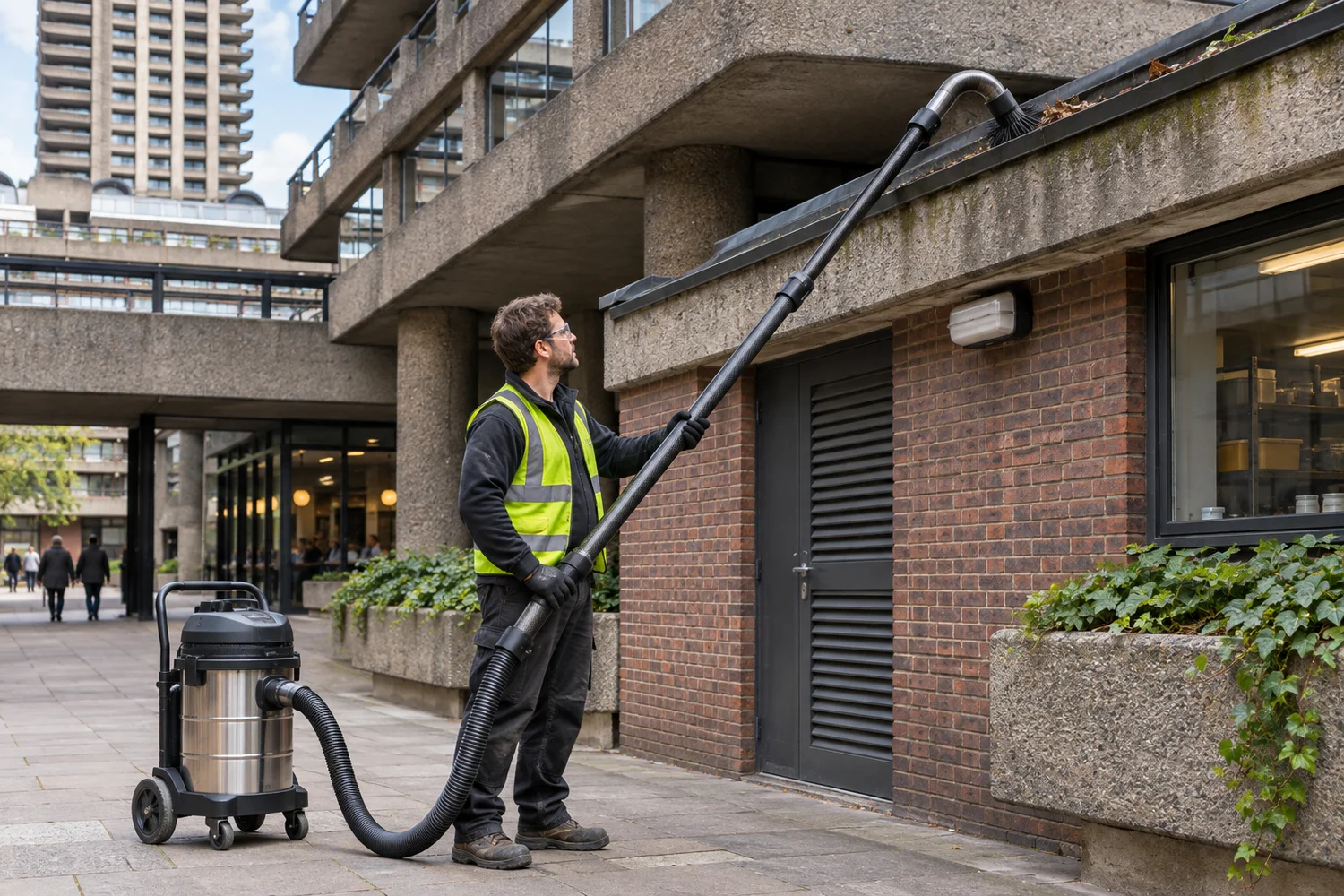
A report of water at the Barbican might relate to a privately controlled gutter, a communal building element or a drain on a raised walking surface. Those require different conversations. Identify the roof edge or visible fitting if you can and describe the location of the first overflow. If you are referring to a common area on the estate, contact the responsible building or estate office before requesting work. For an accessible gutter you have permission to enquire about, we can discuss camera checks and vacuum removal of leaves or moss. The service concerns reachable rainwater gutters and visible fittings, with separate discussion for other drainage issues.
On an adjoining private building, tell us if the street address and the point of overflow sit on different sides. A description that follows the water from the visible edge to the floor below gives us an inspection target. If all you can see is ponding on the walkway itself, we need to establish whether the roofline has any visible connection to it before discussing a gutter clean.
Which location should we look at first?
| Visible symptom | First reference | What to establish |
|---|---|---|
| Water falling onto a raised path | Nearest block and the level above it | Whether an overhead outlet is visible |
| Overflow behind a business entrance | Door and elevation | Who controls the approach |
| Water at a lower courtyard | Pipe termination | Whether the pipe is carrying water from the reported run |
Using the right approach at the right level
A door at street level and an elevated route can both lead towards the same building without reaching the same working space. Tell us which approach the person meeting us can open and where the equipment would need to go. State whether there are stairs, lifts, barriers or a covered route between the entrance and the roof edge in question. If the upper view gives you a clear sight of the water but the lower ground is controlled separately, name both contacts. We can discuss what can be seen or reached from an available position once the access boundaries have been established.

Vacuum clearance in three stages
1
Locate the roof edge
Mark the level where the spill begins.
2
Agree the working route
Check which authorised entrance reaches that part.
3
Trace the outlet
Identify where discharge can be seen from below.
Keeping commercial and residential instructions clear
A commercial entrance may have opening hours, a reception contact and a service route, while a residential part of the same site may have different people responsible for keys and maintenance. Include the correct address and the description of the elevation rather than using one general building name for both. If you are arranging for a unit away from the estate, tell us who manages its frontage or courtyard. A person on site can show where equipment can be positioned and whether deliveries use the same space. Give the time when the route needs to be kept clear and who can confirm any arrangements.
If a letting agent reports the issue, ask them to give the site contact the same reference they use in their work order. Someone who opens a door may have no knowledge of the neighbouring roof. Before we agree the work area, identify the frontage and the person who can explain the rainwater layout if the original report turns out to refer to another level.
Who can move the enquiry forward?
| Building part | Contact to identify | Information to pass on |
|---|---|---|
| Estate common area | Responsible estate team | Level, block and observed direction of flow |
| Privately managed frontage | Owner or managing agent | Agreed work area and available access |
| Shared access route | Keyholder or building reception | Door name and when equipment can pass |
Establishing what can be seen at the roof edge
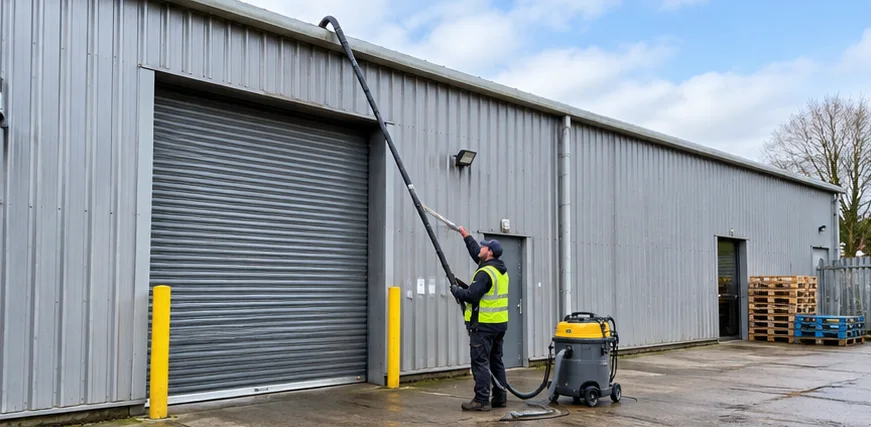
A camera can show the inside of a reachable gutter and the visible opening to a downpipe. We can use a high-reach vacuum to lift loose material and then look again at the accessible channel. A parapet, canopy or higher building element may conceal a section, and we can discuss what is visible from the ground available. If a visible fitting appears out of line after clearance, we can discuss that part separately. Tell us whether the report is of a broad spill, a drip at one join or water emerging at another level. That helps us connect the visible gutter to the part you reported.

Sending the useful facts to the person responsible
Someone may see water from a window or walkway without having authority to open the ground beneath it. Ask them to describe the direction of the flow and the point where it first becomes visible. Label any photographs by building, level and elevation. If a caretaker will meet us, give them the same reference. The property contact can use it to decide whether the area falls within an agreed visit or should be referred elsewhere. If a decision depends on the condition of a reachable channel, identify what the property contact needs to know and where the camera may be able to see it.
Describe where discharge should become visible
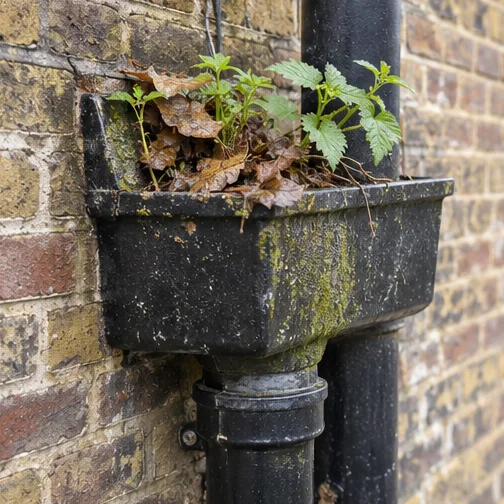
A raised route may pass above a lower courtyard where the pipe ends. When the upper gutter is accessible, we remove loose material from its channel and check the reachable opening. If the discharge point is visible from another level, let us know how we can get there. A photo of a wet patch on the upper route tells us little about whether the pipe below is flowing.
A hidden length beyond the accessible opening has to be treated separately. Tell us where an estate or site contact believes the pipe runs and whether they can verify it on a plan. When the problem appears to extend beyond the accessible rainwater fitting, we describe the parts seen and the symptoms that remain. That gives the person responsible a specific location to use when arranging any further investigation.
If a roof edge cannot be reached from the agreed level, tell us whether the site contact can meet us at a second entrance. We can explain which other visible sections were checked and where the access constraint starts. For a maintenance record, distinguish the section that was cleared from a nearby fitting that could only be viewed. That distinction is useful when several contacts handle the same building.
Questions about Barbican visits
Who handles a gutter report on a Barbican Estate common part?
Start with the responsible estate team. Give them the block and level where the spill appears. If they identify the fitting as privately managed, establish who can authorise work before requesting a visit.
Can a report from a podium identify a gutter reached at street level?
It can show the affected elevation. Give us the vantage point and the route an authorised person can actually open. Both help us determine whether there is a usable position below the gutter.
Does ponding on a raised walk establish a roof blockage?
Ponding only establishes where water has collected. Describe whether it fell from an edge or welled up through the walking surface so we can decide if a gutter inspection is relevant.
What should the concierge know about a private gutter visit?
Tell them which authorised contact arranged the work and which door or courtyard is involved. The concierge may be able to explain access even if another person needs to approve the visit.
Can you check a pipe that leaves the building at a different level?
Show us the visible outlet and its likely termination. We assess reachable openings and describe any concealed section that would need investigation from another position.
How do I describe a fitting behind an architectural screen?
Send a wide picture showing the screen in relation to the gutter and the clear ground around it. The available angle determines which parts the nozzle or camera can reach.
Discuss a gutter visit in Barbican
Name the level where the water appears