

Commercial Gutter Cleaning in London
- Offices, retail and industrial properties
- Agreed gutter runs, outlets and accessible downpipes
- One-off clearance or planned maintenance enquiries
What the booking covers
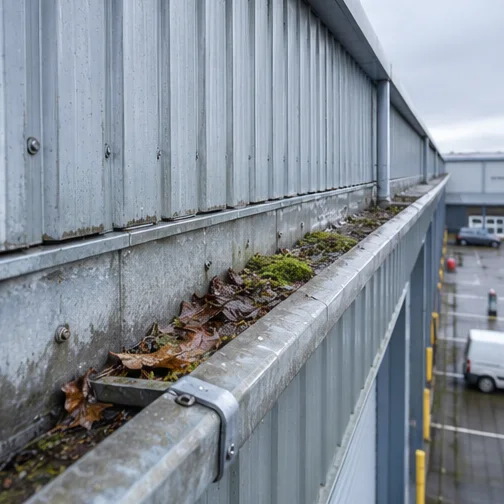
A commercial roof may feed long channels with several discharge points. Water seen above one entrance can come from a restriction at a different point on the same run. A useful enquiry describes the roof and where water appears, rather than assuming the nearest downpipe is responsible. If you have a site plan, identify the affected elevation and any known outlets on it.
Tell us which building and elevations you manage, where the overflow is visible and when the site can be accessed. We arrange clearance for shops, offices and industrial properties and discuss planned maintenance where a single visit will not meet the building’s needs. If a gutter serves shared areas, identify the person who can agree the work and give us access.
What we assess and carry out

Roof zones and separate outlets
Warehouses and larger buildings may have more than one roof zone. An office wing, canopy or neighbouring unit may discharge separately. We agree which areas to assess and avoid assuming that a clean to one elevation includes every run on the property. Point out shared boundaries or drainage serving more than one occupant before we set the visit.
Open entrances and loading areas
A working position that looks available on a plan may sit in an active vehicle route or on a busy customer walkway. Let us know which doors have to stay usable and when deliveries or collections usually happen. We can discuss access and timings before booking so the site contact knows which areas we need to reach.
High-level access
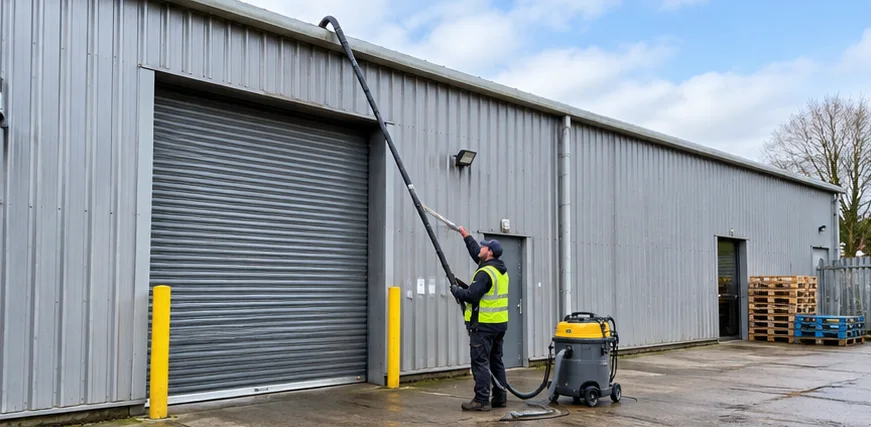
A high-reach vacuum and camera can be appropriate where the roofline is reachable from a suitable position below. A canopy, parapet or restricted route can change the approach. Tell us if there are gated yards, overhead obstructions or areas with restricted access. We can assess which sections are suitable and discuss any access requirements before work.
Silt on long runs
Leaves do not need to be visible from the ground for a commercial gutter to need attention. Fine silt can build near outlets or on shallow sections. When we clear an agreed run, we check accessible outlets along it rather than assuming that the visible overflow marks the full extent of the blockage.
Repeat visits and records
A maintenance enquiry is easier to assess if you can tell us which elevations have blocked before, when they were last cleaned and which areas tend to collect debris. Ask what can be documented for your building. If several people handle facilities and bookings, agree who should receive the findings and who can make decisions about follow-on repairs.
When a fault needs separate work
A clean can expose a leaking joint, poor alignment or a damaged outlet. We discuss visible issues separately. If the building has an internal gutter or concealed rainwater pipe, tell us where there is known access and who holds the relevant information. The source of water inside the building may need further investigation after accessible sections are cleared.
What to tell us before we visit
| What you have noticed | What we assess | What to tell us |
|---|---|---|
| Office building | Check which roof areas serve separate elevations | Confirm access contact and shared passages |
| Retail frontage | Review canopies, entrances and downpipes | Explain opening times and busy periods |
| Industrial unit | Assess long runs, loading doors and yard access | Identify vehicle routes and delivery windows |
| Managed portfolio | Agree the premises and runs included in the enquiry | Provide individual postcodes and site contacts |
If you have a photograph, include a wider view that shows the work area in relation to a door, wall or path. A close-up is useful alongside that view. Give us any restrictions that would make it difficult to use the obvious access route, and tell us who can open gates or agree access to shared areas.
From enquiry to completion
Tell us what you need
We arrange clearance for shops, offices and industrial properties and discuss planned maintenance where a single visit will not meet the building’s needs. If a gutter serves shared areas, identify the person who can agree the work and give us access.
Agree the work and access
We agree which parts of the property the booking covers and discuss how we can reach them. If there is a restricted route, tell us how it works before the appointment. The condition and access on arrival can affect what is practical, so we check the work area before starting. If the work needs a separate assessment, we explain the reason before proceeding.
Review what was found
We explain what has been carried out and tell you about visible faults or restrictions that affect the result. If one part of the property needs a separate visit or another service, we discuss it with you. Keep the location of any outstanding issue in your notes so you can refer to the exact place when you contact us again.
Questions about your visit
Can you arrange repeat visits?
We can discuss a maintenance arrangement for commercial premises. Tell us which parts of the site are affected and what has been done before.
Can we arrange access through our facilities team?
Yes. Give us a contact who knows the roofline, can confirm which zones belong to the job and can arrange access on the day.
What if the affected gutter is above a loading door?
Identify the door and tell us when it is in use. The available working position and site activity affect how the visit can be arranged.
Plan the work around your property
The first visit to a multi-unit building often depends on access information held by different people. The tenant may have seen the overflow, but the facilities team may know where the pipe connects and which gates can be used. Send us the observation and the access contact together. If the same roofline serves several units, confirm which parts you can authorise and which need an agreement with the building manager.
Before agreeing a visit, check who will be there, how the working area can be reached and which parts of the building are included. If an access arrangement changes, let us know before the appointment.
If you are booking for someone else, give us the full property address and a contact who can make decisions about access on the day. For a shared building, identify the affected section and who can authorise work there. Let us know if opening times, deliveries or access through a neighbour’s property will affect when we can reach it.
If the enquiry also involves the rainwater system, see our gutter cleaning in london service for the work that can be considered separately.
Decisions we can help you make
Agree the units and elevations in writing
Provide the name or number of each unit and identify which wall the issue affects. A single postcode may cover a yard with several roofs. We need the location of the specific gutter and the route to it. If your remit covers only one tenant’s frontage, make that clear before we assess a shared channel or propose a visit. Site plans and wide photographs are useful when the point where the water appears is hard to describe by phone.
Set the handover before we start
Tell us what your maintenance record needs to show and who receives the findings. One person may be on site while another approves work. If we encounter a run we cannot access or a visible fitting fault, we can explain where it is and what needs a separate decision. Keep that note against the actual building and elevation so it is useful during the next visit or when another member of staff takes over.
Arrange your visit
Share your postcode, what you have noticed and which part of the property we need to reach. We’ll discuss what can be assessed on the visit and the available times.