
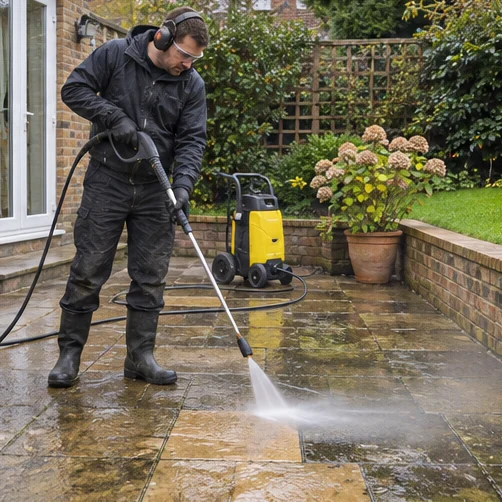
Jet Washing in London
- Patios, paths and other suitable hard surfaces
- Surface condition and drainage checked first
- Tell us about algae, moss or stubborn marks
What the booking covers
Jet washing is a treatment for suitable exterior surfaces. Moss and surface grime are different from oil that has soaked into porous paving or a finish that has worn away. We discuss what can reasonably be cleaned and how the surface condition affects the job before relying on pressure alone.
Book a discussion about pressure cleaning a patio, driveway or path. We ask what the surface is made from, where water can drain and what you want removed. Loose joints, flaking finishes and delicate materials can affect what is suitable. Tell us if the area slopes towards the building or shares a boundary with a neighbouring property.
What we assess and carry out

Block paving and joints
Block paving can collect dirt in the surface texture and between the units. The condition of jointing material affects what can be washed without making loose areas worse. Tell us if blocks already move, if weeds grow through joints or if a previous clean removed sand. Ask what is included if the jointing needs attention after washing.
Stone flags and patios
Stone varies in hardness and condition. The same pressure is not appropriate for every flag, especially if a surface flakes, has a coating or sits on loose mortar. We assess the condition and discuss a suitable approach. Mention replacement flags or steps that are a different material from the rest of the patio.
Slopes, thresholds and run-off
Water needs somewhere to go during cleaning. A slope towards an airbrick, door threshold or garage changes how the area can be worked on. Tell us about channels, gullies and any point where water already pools. A blocked drain or failed fall needs a separate assessment if it will prevent water from leaving the surface.
Algae, moss and ingrained marks
A green film in a shaded walkway differs from a black mark, rust staining or oil that has entered porous material. Removing surface growth can improve the look of an area without changing discolouration already in the stone. Let us know when a mark appeared and whether anything has already been applied to it.
Sensitive edges and nearby finishes
Paving often meets painted fencing, brickwork, timber or glass. We need room to work around those boundaries, and some finishes may not suit pressure washing at all. Moveable pots, loose furniture and planters can hide damaged edges. Tell us what can be moved and where fixed items limit access to the area.
Access and working space
A rear patio may only be accessible through the property, while a driveway may be used by several households. Explain the route to the work area, whether gates are wide enough and when you can keep the section available. Mention any outside water connection when you enquire so the equipment and access can be discussed in advance.
What to tell us before we visit
| What you have noticed | What we assess | What to tell us |
|---|---|---|
| Algae on a shaded path | Assess the paving and route for run-off | Identify where water already pools |
| Driveway with loose joints | Check the surface and joint condition | Mention loose blocks and previous washing |
| Patio beside an extension | Look at the threshold and any drain channel | Identify door and airbrick positions |
| Oil marks on porous paving | Discuss staining and what can be cleaned | Say how long the mark has been there |
If you have a photograph, include a wider view that shows the work area in relation to a door, wall or path. A close-up is useful alongside that view. Give us any restrictions that would make it difficult to use the obvious access route, and tell us who can open gates or agree access to shared areas.
From enquiry to completion
Tell us what you need
We ask what the surface is made from, where water can drain and what you want removed. Loose joints, flaking finishes and delicate materials can affect what is suitable. Tell us if the area slopes towards the building or shares a boundary with a neighbouring property.
Agree the work and access
We agree which parts of the property the booking covers and discuss how we can reach them. If there is a restricted route, tell us how it works before the appointment. The condition and access on arrival can affect what is practical, so we check the work area before starting. If the work needs a separate assessment, we explain the reason before proceeding.
Review what was found
We explain what has been carried out and tell you about visible faults or restrictions that affect the result. If one part of the property needs a separate visit or another service, we discuss it with you. Keep the location of any outstanding issue in your notes so you can refer to the exact place when you contact us again.

Questions about your visit
Can every patio be pressure washed?
Surface material, condition and nearby finishes matter. Tell us what the patio is made from and whether joints or coatings are already failing.
Can you guarantee removal of oil marks?
We discuss the condition and the type of mark first. Oil that has soaked into paving can remain visible after surface cleaning.
Should I move furniture?
Tell us what is fixed and what can be moved. Agree access and preparation before the visit so we can reach the area you want cleaned.
Plan the work around your property
A drive and rear patio may look like one continuous job on a quote request, but they can have different surfaces and run-off routes. Send a wide photograph of each area, with thresholds or drains visible. We can discuss them separately if one has loose joints or discharges towards the property. Mention any coated steps, timber boundaries and planters that will stay in place.
Before agreeing a visit, check who will be there, how the working area can be reached and which parts of the building are included. If an access arrangement changes, let us know before the appointment.
If you are booking for someone else, give us the full property address and a contact who can make decisions about access on the day. For a shared building, identify the affected section and who can authorise work there. Let us know if opening times, deliveries or access through a neighbour’s property will affect when we can reach it.
If the enquiry also involves the rainwater system, see our gutter cleaning in london service for the work that can be considered separately.
Decisions we can help you make
A surface can look worse when wet for a reason
Dark patches can reflect water pooling, ingrained staining or the way different materials absorb water. A wet photograph and a dry photograph of the same area are useful together. Tell us if it takes longer for one corner to dry, or if a mark is concentrated where a vehicle stands. Those observations help distinguish what you want removed from an issue with drainage or the condition of the paving.
Decide what should happen before washing
If a gutter or downpipe repeatedly discharges onto a path, the same area can become dirty again even after washing. If tree work will drop branches or leaf debris onto a patio, arrange the sequence so the clean is useful. Mention any project that will change the area, including repairs to edging or drainage. We can discuss the surface and access in the context of those plans.
Arrange your visit
Share your postcode, what you have noticed and which part of the property we need to reach. We’ll discuss what can be assessed on the visit and the available times.