
Gutter Cleaning in London
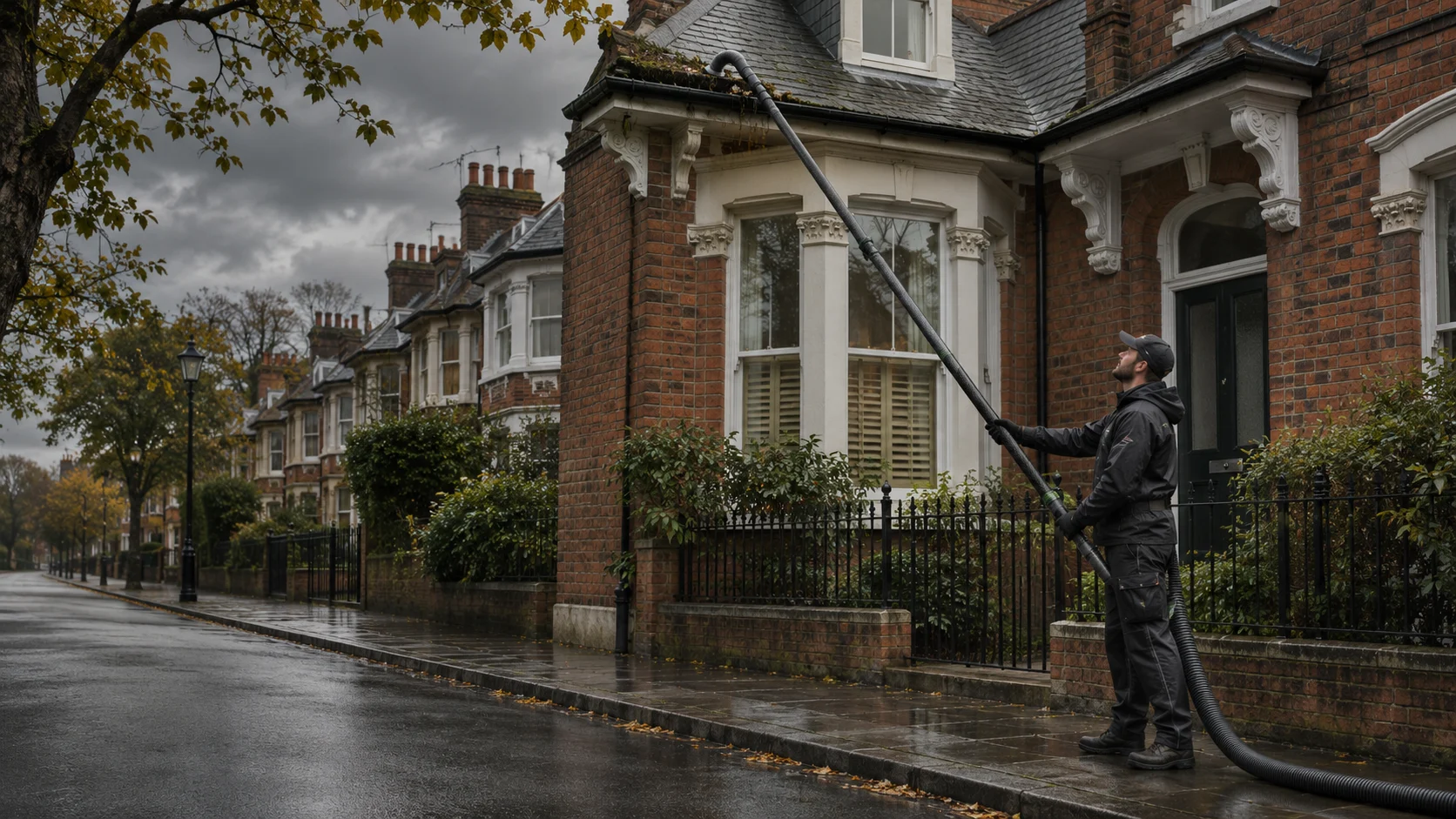
- High-reach vacuum clearance where access allows
- Accessible gutters, outlets and downpipes checked
- Ask about urgent availability for your postcode
What the booking covers
Gutter cleaning covers the accessible rainwater system above ground: the open channels that catch water from the roof, the outlets that connect those channels to the pipes, and the reachable downpipe sections. The job may involve one independent run or several elevations. A porch, bay or extension can have its own small outlet even when it sits directly beneath the main roof.
Book a visit for an overflowing gutter, a blocked outlet or routine clearance. We work through the agreed rainwater runs, remove material that is preventing flow and tell you what we can see of their condition. If rainwater is spilling down a particular wall, tell us where it starts. A description of the affected elevation often gives us more to work with than a general request for a whole-house clean.
What we assess and carry out

The debris in the channel
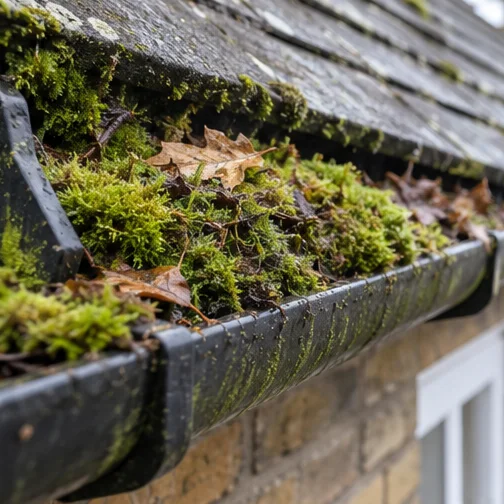
Wet leaves, roof moss and fine silt behave differently. Leaves can bridge the opening of an outlet, while silt settles along the bottom of a channel where it is hard to see from the pavement. A pass over the top can leave the outlet partly obstructed. We work through the accessible run rather than only collecting material at the place where the gutter overflowed.
Ground-based vacuum clearance
Where the height and working position are suitable, a gutter vacuum lifts the material into a collection unit. Extension poles carry the nozzle to the channel. We need enough room to guide the nozzle along the gutter and approach an outlet without pressing it against the fascia or using the pipe as a support. A camera can show sections hidden behind the roof edge.
Rear extensions and glass roofs
A rear run may sit over a conservatory or an extension with no direct working position underneath. We look for a usable approach from the side or garden. The fact that a gutter is easy to see from an upstairs window tells us little about how to reach it with a pole. Mention rear access through the house and any shared gates when you call.
Downpipes and drainage
We check what can be reached at the outlet and downpipe. If a hopper has filled with leaves, clearing the channel alone leaves the bottleneck in place. If water is already backing up from a drain at ground level, the restriction may be farther downstream. Tell us if the pipe discharges into a water butt, an open gully or a concealed drain.
A leak after the clean
Water escaping from a joint after the adjacent channel and outlet have been cleared can point to a fault with the fitting or gutter. Standing water can also come from the way the section is supported. We explain what is visible and whether a repair should be discussed. Roofing, walls and underground drains can also cause damp, so the position of a stain cannot establish the source by itself.
An urgent visit
If water is entering the building or pouring onto an entrance, give us the location of the problem, the height of the gutter and the full postcode. We can discuss current availability and what access the job needs. During the enquiry, mention any loose material overhead. A booking for clearing debris can need a different assessment if part of the gutter is visibly hanging away from the roofline.
What to tell us before we visit
| What you have noticed | What we assess | What to tell us |
|---|---|---|
| Overflow at one corner | Look at the outlet and any hopper beneath it | Tell us whether the downpipe is taking water |
| Water running along the fascia | Check the accessible channel and visible fittings | Identify the affected elevation |
| Debris above a rear extension | Assess the angle and working position for the pole | Explain how we can get to the back |
| Drip from a joint | Clear nearby debris and look for a visible fault | Say if it continues after the rain eases |
If you have a photograph, include a wider view that shows the work area in relation to a door, wall or path. A close-up is useful alongside that view. Give us any restrictions that would make it difficult to use the obvious access route, and tell us who can open gates or agree access to shared areas.
From enquiry to completion
Tell us what you need
We work through the agreed rainwater runs, remove material that is preventing flow and tell you what we can see of their condition. If rainwater is spilling down a particular wall, tell us where it starts. A description of the affected elevation often gives us more to work with than a general request for a whole-house clean.
Agree the work and access
We agree which parts of the property the booking covers and discuss how we can reach them. If there is a restricted route, tell us how it works before the appointment. The condition and access on arrival can affect what is practical, so we check the work area before starting. If the work needs a separate assessment, we explain the reason before proceeding.
Review what was found
We explain what has been carried out and tell you about visible faults or restrictions that affect the result. If one part of the property needs a separate visit or another service, we discuss it with you. Keep the location of any outstanding issue in your notes so you can refer to the exact place when you contact us again.

Questions about your visit
Can I book a single gutter run?
Yes. Identify the elevation and any independent porch or extension gutter when you enquire. We can discuss what belongs in the visit before booking.
Is every property suitable for a vacuum?
The height, angle and room below the gutter determine what we can reach. We assess each property before deciding how to clear it.
Can you help with a blocked gully?
Tell us where the water first backs up. Our gutter visit covers accessible rainwater components. A blockage beyond the pipe may need a drainage specialist.
Plan the work around your property
A porch gutter that discharges onto a lower roof can hide two separate issues. If the porch overflows and the upper channel is also full, each run needs an access check. We identify which sections belong to the booking and work through them separately where they have their own outlets. Tell us about the back elevation as well as the visible front. A clear front gutter says little about a channel above a kitchen extension.
Before agreeing a visit, check who will be there, how the working area can be reached and which parts of the building are included. If an access arrangement changes, let us know before the appointment.
If you are booking for someone else, give us the full property address and a contact who can make decisions about access on the day. For a shared building, identify the affected section and who can authorise work there. Let us know if opening times, deliveries or access through a neighbour’s property will affect when we can reach it.
If the enquiry also involves the rainwater system, see our gutter repairs in london service for the work that can be considered separately.
Decisions we can help you make
If only one side overflows
A clean can be discussed for a single elevation. Establish whether that section shares a downpipe with another gutter before assuming it stands alone. If two roofs discharge into one opening, a blockage may show itself on the lower run first. We use the roof and pipe layout to decide which accessible parts are relevant to the visit.
Where we stop tracing a blockage
A pipe disappearing underground sets a practical limit on a gutter visit. If its accessible sections are clear and water still backs up from below, we explain the observation. That lets you describe the remaining issue accurately if a separate drainage assessment is needed.
Arrange your visit
Share your postcode, what you have noticed and which part of the property we need to reach. We’ll discuss what can be assessed on the visit and the available times.