
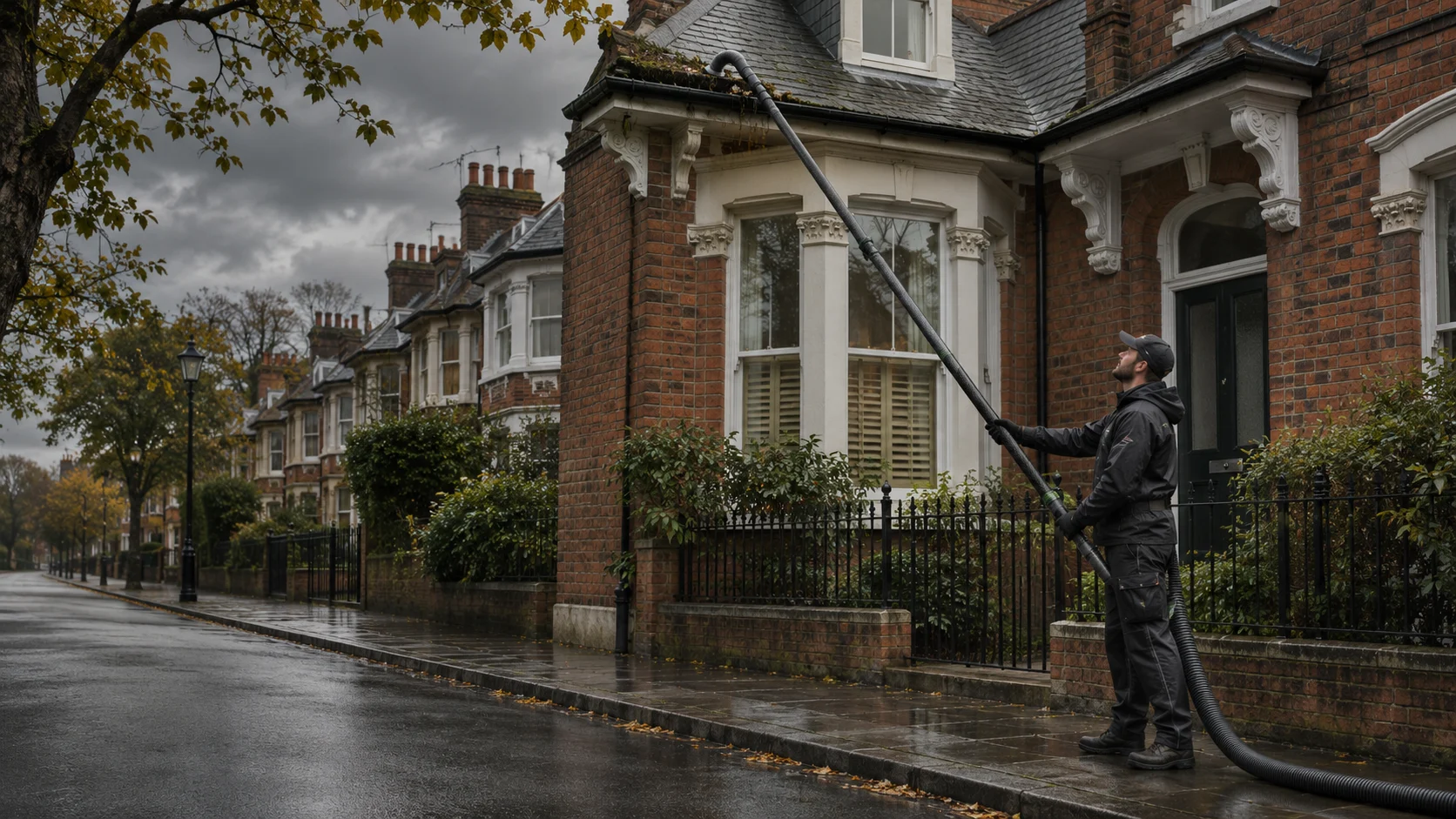
Gutter Cleaning London
- Leaves, moss and silt cleared
- Blocked outlets and accessible downpipes checked
- For homes and commercial properties
Where is the rain going?
Start with what you can see from ground level. The pattern of the overflow helps us decide where to look first.
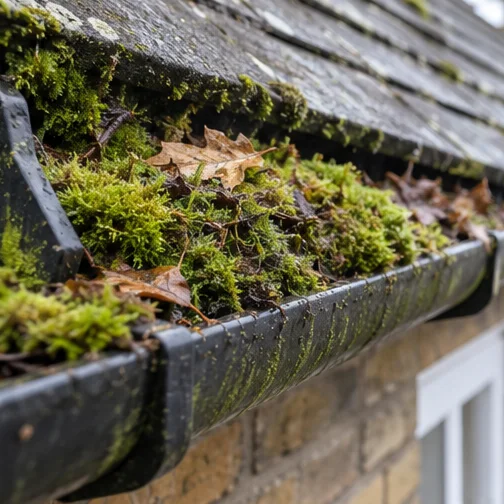
Leaves, moss and silt
Loose leaves and moss can collect at corners and outlets. Silt sits lower in the channel and may remain after the larger debris has shifted. We remove the build-up so water has a route along the gutter.
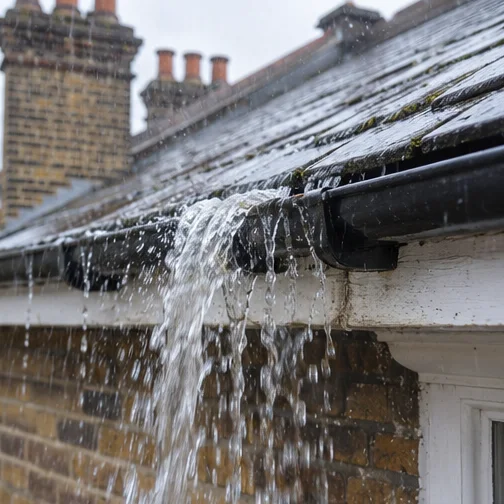
Water over the edge
An overflowing corner can point to a blocked outlet, while a drip from a joint may need a repair. Tell us where you see the water during rain. We look at the affected run and explain what we find after clearing it.
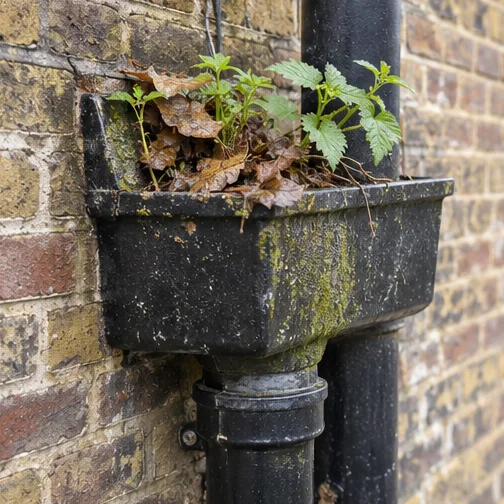
Blocked downpipes
A full hopper or an outlet choked with debris can stop water entering the pipe. We clear accessible openings and check whether water passes through. A problem beyond the rainwater pipe may need a separate drainage assessment.
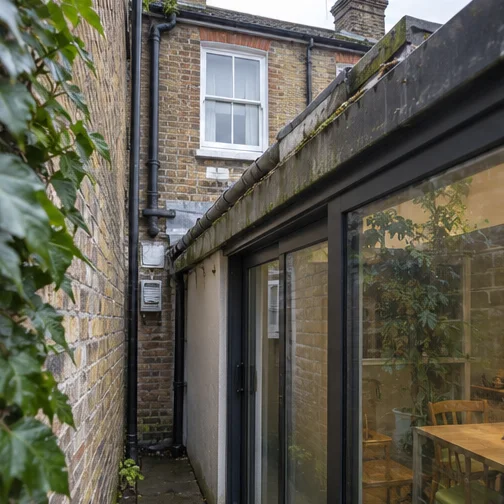
Gutters over an extension
A side return, conservatory or narrow passage can restrict where we stand and how we reach the eaves. We assess the available space before choosing the equipment. Mention these features when you book, especially if they hide the rear gutter.
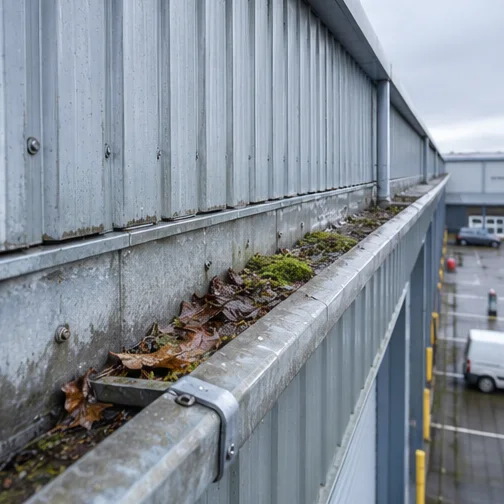
Commercial drainage
Long gutter runs and more than one outlet can make the source of an overflow hard to spot. At shops, offices and industrial units we discuss access and where the problem shows up, then work through the accessible runs and outlets.
| What you notice | What we look at | What we can do |
|---|---|---|
| Water spills along the gutter | Leaves, moss or silt in the channel | Clear the accessible run and check the outlet |
| Overflow beside a downpipe | Gutter outlet, hopper and accessible pipe | Remove debris and check water can pass through |
| A joint still drips after clearance | Visible gaps, cracks or loose fittings | Explain the fault and discuss gutter repair |
Follow the water down
Open a label to see what we look at on a typical UK roofline. The drawing highlights the part you select.
Roofline
We look at the height of the eaves, the position of the gutters and any obstruction below. That tells us where we can work and whether we can reach the run with a pole.
Gutter channel
We remove leaves, moss, twigs and silt from the accessible channel. A pole-mounted camera can help us see debris in a run that is hidden from ground level.
Gutter outlet
The outlet is the opening between the gutter and the downpipe. We check for packed debris around it and clear the opening where it can be reached.
Downpipe
We check accessible downpipes and look for an obstruction if water backs up above the pipe. We check the flow after clearing the accessible parts.
Drainage connection
The rainwater pipe may end above a gully or enter a drain. If the visible connection suggests a blockage beyond the pipe, we explain what appears to be outside the gutter clean.
What we bring to the roofline
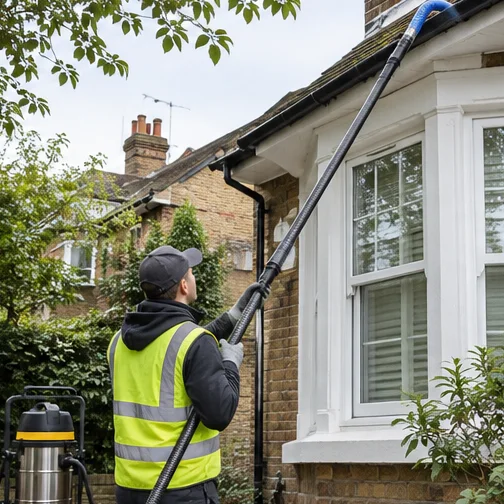
We use a ground-based gutter vacuum with extension poles on suitable properties. The nozzle draws wet leaves, moss and silt into the collection unit. Where the gutter is difficult to see, a high-reach camera can show what is sitting in the channel and help us check it after clearance.
Some outlets or sections of gutter need a closer look or manual clearance. Height, obstructions and the space below the roofline determine whether another access method is suitable. Mention glass roofs, narrow passages and shared walkways so we know what to assess.
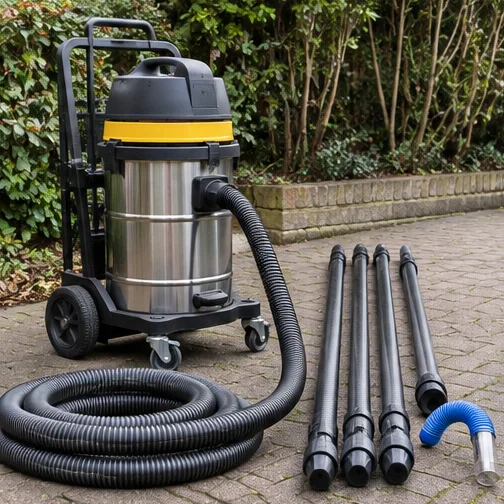
| Method | When it helps | What affects access |
|---|---|---|
| High-reach vacuum | Clears debris from suitable gutters from ground level | Height, pole angle and a clear position below |
| Pole-mounted camera | Shows debris or visible faults in hard-to-see runs | A clear view into the gutter from a reachable angle |
| Manual clearance | Removes material where vacuuming is unsuitable and direct access is possible | Condition of the gutter and suitable access |
| Outlet and pipe checks | Checks where water enters and passes through the accessible downpipe | Reachable openings and the pipe layout |
Which method could suit your property?
Choose the closest match to see what we consider on a visit. We confirm the approach after assessing the property.
From a terrace to a trading estate
A visit starts with the building and the way we can reach its gutters. Here’s what helps us plan for different properties.
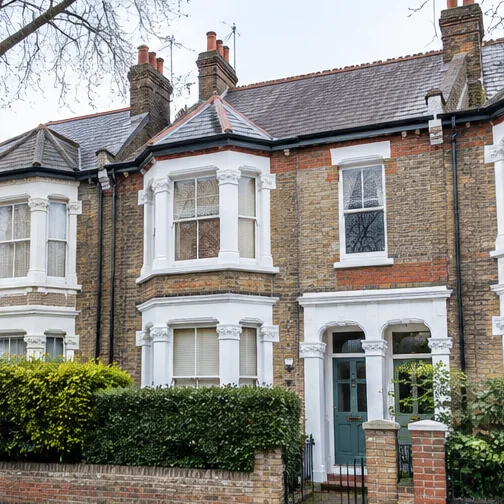
Terraced houses
Front and rear gutter runs often need separate access. Tell us if the only route to the back is through the house, or if a side return or extension sits beneath the gutter.
Semi-detached houses
A side passage can give us another position from which to reach the eaves. Let us know about gates, lean-tos and shared access, and point out any separate runs above a porch or bay.

Detached houses
We discuss which elevations and roof levels need attention. Porches, attached garages and lower roofs can have their own outlets, so it helps to say where you see water collecting or spilling.
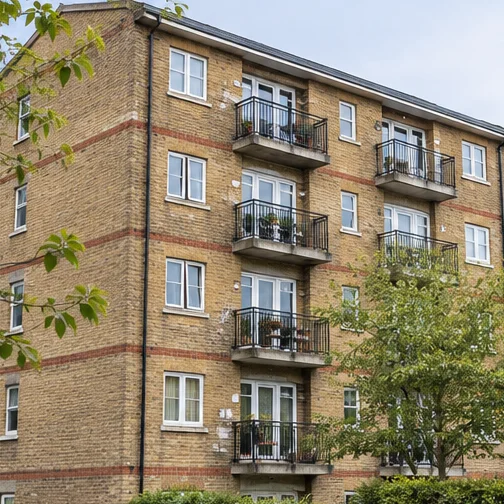
Flats and apartment buildings
If the gutter serves several homes, tell us who manages the building and who can arrange access. We can discuss the shared roofline with the person responsible for booking the work.
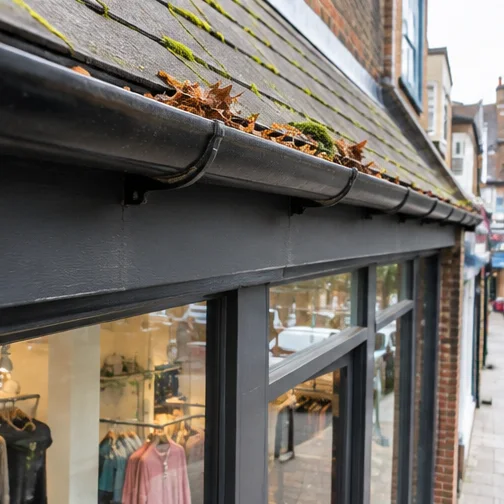
Commercial properties
On offices, shops and industrial units, tell us which elevations are affected and when entrances or loading areas are busiest. We use that information to plan the visit and assess access.
| On the visit | Residential property | Commercial property |
|---|---|---|
| Access | Check side passages, rear extensions and room to position the pole | Agree entry to the site and consider entrances, loading areas or shared routes |
| Equipment | Use a high-reach vacuum and inspection camera where the roofline allows | Assess each run for suitable reach and discuss other access requirements before work |
| Clearance | Remove debris from agreed gutter runs and accessible outlets | Work through agreed runs, which may have several outlets and downpipes |
| Checks | Check accessible pipe flow and flag visible faults to the person who booked | Discuss affected runs and visible faults with the site contact |
What happens when you book
01
Tell us what you’ve noticed
Call or use our enquiry form with your postcode, property type and the part of the building affected. If the issue only shows during heavy rain, tell us which corner or wall it runs down.
02
We assess access and the gutter
We look at the height, the space below the roofline and the condition of the accessible sections.
03
We remove the blockage
We clear the accessible runs using a high-reach vacuum where suitable, or remove debris by hand when the access allows.
04
We check the flow and explain faults
After clearing the gutter and accessible outlets, we check the downpipes. If we see a loose fitting, a crack or another visible defect, we explain what we’ve found and discuss whether a repair is needed.
Have your postcode and a description of the overflow to hand.
Gutter Cleaning Across London
We serve homes and commercial properties across London and the M25 area. Send us the full postcode and any details about access so we can confirm whether we can take on the job.
Use the map to locate your part of London. We confirm availability for each address.
London and the M25 area
If the map is unavailable, use the postcode enquiry to check your address.
Other work around the property
Gutter repairs
If water still leaks from a joint after the channel is clear, we can look at the condition of the gutter and discuss repair.
Commercial gutter cleaning
Speak to us about a one-off clearance or regular gutter maintenance for your business.
Jet washing
Ask about pressure washing for suitable outdoor hard surfaces.
Window cleaning
Ask about exterior window cleaning for your home or business.
Tree surgery
If branches are close to the roofline, ask about the tree work available for your property.
Two questions before you book
Can you clean the back gutters on a London terrace?
Yes, where there is a suitable route to the back of the property and room to operate the equipment. Let us know if access is through the house or a shared passage, and tell us about any conservatory or extension beneath the gutters. That helps us plan the visit.
Does water spilling over mean the gutter needs repair?
It can be a blockage, especially if water spills beside the downpipe. We check the gutter channel, outlet and accessible pipe before advising on repairs. If water still escapes from a joint or runs behind the gutter after clearance, we can discuss what needs attention.
Before you arrange a visit
Do I have to be home for the visit?
Tell us how we can reach each gutter when you enquire. If we need you to open a gate, give access through the house or let us into a shared area, agree how that will work before the appointment.
Can I book just the front or back gutter?
Tell us which elevation you want checked and why. Front and rear gutters may drain separately.
Can you clean a gutter above a conservatory?
It depends on the gutter height and where there is enough room to reach it from the ground. Tell us the position of the conservatory and how the rear of the property can be accessed.
Will gutter cleaning stop a damp patch?
It can help if the patch is caused by water overflowing from a blockage. Damp can also come from a leaking joint or another part of the building. We can flag visible gutter faults so you know what to investigate next.
What should I mention when booking for a block of flats?
Tell us how many storeys the building has, which side is affected and who manages the shared areas. Let us know about gates, parking restrictions or any access arrangements a resident or managing agent needs to make.
Can I arrange regular gutter cleaning for a commercial site?
Yes. Tell us whether access needs to fit around deliveries or opening hours. We can discuss a suitable maintenance arrangement.
What if a downpipe feeds a water butt?
Mention the water butt when you book and tell us which downpipe feeds it. This helps us identify the outlet when checking the pipe.
Book your gutter clean
Send us your postcode, the type of property and where you see the overflow or leak. We’ll discuss access and the next available visit.