

Gutter Repairs in London
- Leaks, loose fittings and damaged sections
- Identify whether clearance or repair is needed
- Discuss repair once the affected run is assessed
What the booking covers
Gutter repairs address a fault in the gutter or its fittings. Rain running over an edge may instead point to a blockage. A repair assessment starts by distinguishing the path of the water from the position of the stain or puddle. A mark low on the brickwork can be some distance from the fitting that first let water escape.
Call about a joint that keeps leaking, a gutter pulling away from the roofline or a downpipe that has shifted. We look at the affected rainwater fittings and explain whether they need clearance, a local repair or a discussion about replacing a damaged section. If you can describe the first point where water escapes, we can prepare for the visit more effectively.
What we assess and carry out
Leaking joints and end caps
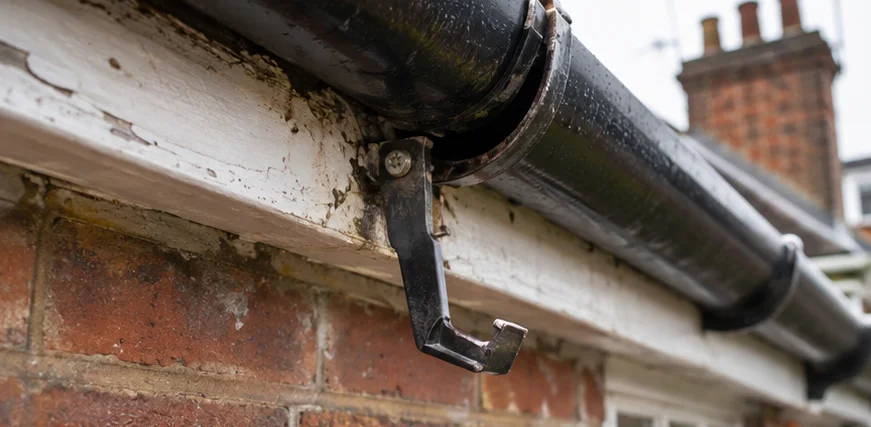
A small drip beneath a connection can come from movement at the joint, debris around the connection or a fitting that no longer seals. We look at the join and the adjacent run. If material is causing water to stand against the fitting, clearing it helps reveal whether the joint itself needs attention.
Loose brackets and sagging sections
Brackets support the gutter and help maintain its fall toward the outlet. If a section dips or shifts, water can collect away from the downpipe. We assess the visible support and the condition of the adjoining run. If the fixing surface behind the gutter is damaged, replacing a bracket alone may not resolve the underlying issue.
Cracks and incompatible fittings
A cracked fitting or broken section can sometimes be repaired locally, depending on what it connects to and whether a suitable component is available. Guttering comes in different profiles and materials. A piece that looks similar from the pavement may fit differently at the joint. Tell us if earlier work introduced a different material or profile.
Downpipe connections and clips
Movement at a pipe can show up at an offset bend, clip or shoe. We check the visible connection and discuss which part needs attention. If the pipe is firmly fixed but water emerges from the top, the cause may be a blockage rather than a loose joint. A backing-up drain at ground level can change what needs investigating.
Clearing first when useful
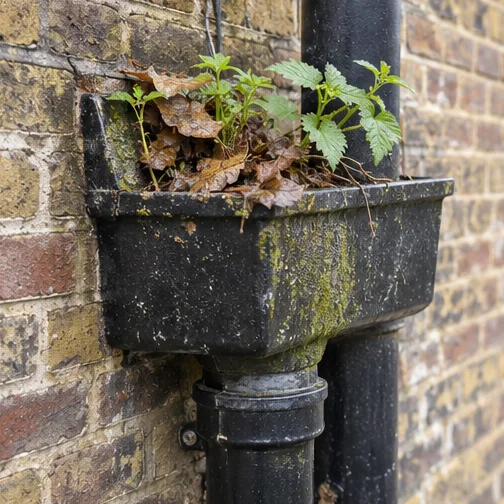
Leaves and silt may hide a crack or create an overflow that looks like a leaking joint. We discuss whether clearing the accessible run will help isolate the fault. If the fitting remains visibly loose after clearance, we can discuss a repair without assuming that every stain on the wall comes from the gutter.
When repair has limits
A local repair makes sense when the surrounding gutter and its support can take the work. Multiple damaged fittings or a gutter that has deformed over a longer stretch can need a wider discussion. If water is coming from roof tiles, the fascia or building fabric, we explain what we can see so you can decide what to investigate next.
What to tell us before we visit
| What you have noticed | What we assess | What to tell us |
|---|---|---|
| Drip beneath a joint | Look for movement, obstruction or visible gaps | Say when the dripping starts |
| Gutter dipping in the middle | Assess the run and supporting brackets | Identify how long the section has been sagging |
| Loose downpipe bend | Look at accessible clips and connections | Tell us whether water is escaping above or below |
| Several broken fittings | Assess neighbouring sections and compatibility | Mention earlier repairs or changes |
If you have a photograph, include a wider view that shows the work area in relation to a door, wall or path. A close-up is useful alongside that view. Give us any restrictions that would make it difficult to use the obvious access route, and tell us who can open gates or agree access to shared areas.
From enquiry to completion
Tell us what you need
We look at the affected rainwater fittings and explain whether they need clearance, a local repair or a discussion about replacing a damaged section. If you can describe the first point where water escapes, we can prepare for the visit more effectively.
Agree the work and access
We agree which parts of the property the booking covers and discuss how we can reach them. If there is a restricted route, tell us how it works before the appointment. The condition and access on arrival can affect what is practical, so we check the work area before starting. If the work needs a separate assessment, we explain the reason before proceeding.
Review what was found
We explain what has been carried out and tell you about visible faults or restrictions that affect the result. If one part of the property needs a separate visit or another service, we discuss it with you. Keep the location of any outstanding issue in your notes so you can refer to the exact place when you contact us again.
Questions about your visit
Can you match older guttering?
Tell us the profile or material if you know it. We assess the existing connections and discuss suitable options once we can see the fittings.
Should I book a clean or repair?
Describe the leak and any visible movement. A blocked outlet can mimic a repair fault, so we can discuss the best first visit based on what you have observed.
Does a repair include fixing damp indoors?
We assess the gutter or rainwater fitting. Damp inside the building can have other causes, which may need separate investigation.
Plan the work around your property
A gutter that dips in the centre may appear to leak at a seam because that is where water collects. Replacing a seal without checking the support may leave the cause of the standing water in place. We look at the visible position of the gutter and what it drains into. Knowing when a section was last repaired, or whether the wall behind it has changed, can help explain why the fitting no longer sits as expected.
Before agreeing a visit, check who will be there, how the working area can be reached and which parts of the building are included. If an access arrangement changes, let us know before the appointment.
If you are booking for someone else, give us the full property address and a contact who can make decisions about access on the day. For a shared building, identify the affected section and who can authorise work there. Let us know if opening times, deliveries or access through a neighbour’s property will affect when we can reach it.
If the enquiry also involves the rainwater system, see our gutter cleaning in london service for the work that can be considered separately.
Decisions we can help you make
Describe where the water starts
A photograph of the wall after a shower can show the effect of a leak but not necessarily its origin. A wider view of the gutter, outlet and the board behind them helps us understand where to look. If you can see a drip from ground level, note whether it appears at the joint as water first reaches it or only after the gutter fills. Also tell us if the section moves in wind or if any part has already come loose.
What to expect from a local repair
We discuss the affected fitting in relation to its neighbouring sections. A new outlet has to connect to the channel and pipe that are already in place. A new bracket needs a sound fixing position. If the surrounding material cannot support the work, we explain what we can see before recommending another approach. Where the leak has left stains, a gutter repair addresses the rainwater route rather than cleaning or redecorating the affected wall.
Arrange your visit
Share your postcode, what you have noticed and which part of the property we need to reach. We’ll discuss what can be assessed on the visit and the available times.