
Gutter Cleaning Brixton
- Identify which frontage receives the water
- Show the canopy and upper eaves in the same view
- Agree an approach with the person responsible for the site

Identify the entrance and the roof that serves it
Lambeth’s Brixton conservation profile records covered markets alongside civic, residential and commercial premises. For a shop or nearby building, identify whether the spill starts at its own roof edge or lands on it from above. A canopy and the higher gutter may be managed by different contacts.
Lambeth’s Brixton conservation area statement identifies commercial streets including Electric Avenue and Atlantic Road, the Market Row arcade and the street market on Brixton Station Road. At a property near the market, tell us whether the affected entrance is on the street, at the end of a covered route or beside a service yard. Give a fixed landmark, such as the nearest upper window or the corner next to the doorway. A gutter may turn away from the frontage before it reaches the outlet. A photo showing both elevations can help identify that return.
Ask who saw the water first and what they could see from their position. The person at the entrance might see drops falling off the front edge of a sign. Someone on an upper floor may see a spill near the hopper. If both reports came from the same shower, note the approximate time and keep the locations separate. The water may cross a ledge, cover or lower roof before it reaches the ground. The first point it touches one of those features can be more useful than a photo of the wet paving alone.

Trace a Camden elevation
1
Locate the reported spill
Identify which frontage receives the water.
2
Agree the working route
Show the canopy and upper eaves in the same view.
3
Check the remaining details
Agree an approach with the person responsible for the site.

Check how the team reaches the affected wall
A service entrance can lead through a shared yard or behind a row of units. Explain who can open it and when the route is used by deliveries, staff or residents. The space may be open near the gate but narrower behind an extension or beneath a fixed cover. Show the route from the gate to the wall in a photograph. If the work concerns the frontage as well as the rear, describe the available position below each length. A route to the yard may help with one elevation while leaving another to be approached separately.
At a house or converted terrace, a side passage may narrow beside the rear addition or lead down steps towards the garden. Give the width at the tightest point and the height from the garden if that is the relevant side. Show any cover or lower roof between the path and the gutter. If access passes through a dwelling or a garden used by one flat, confirm who can admit the team and who agrees the work on the shared roof. A resident with a view of the leak may have no access to the ground beneath it.
Brixton observations for an enquiry
| What you see | Detail to send | What it helps establish |
|---|---|---|
| Water falling outside a covered entrance | Point where water first reaches the canopy or sign | Relates the entrance report to the roof or fitting above |
| Spill near a corner frontage | Which wall wets first and where the nearest outlet sits | Locates the return that may serve the roof |
| Water crossing a rear roof | Whether an upper pipe discharges onto it | Shows how the two levels may be connected |
| Wet paving beside a pipe | Whether an open gully or concealed entry is visible | Describes the last observable part of the route |
Follow the water through the visible parts of the system
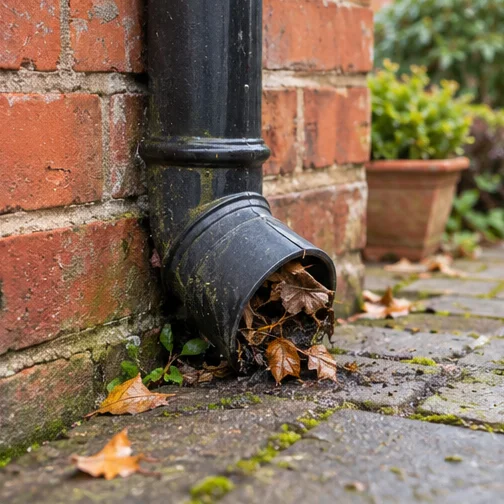
A pipe can discharge onto a canopy or low roof before the water reaches another gutter. If that lower gutter spills, record where the upper pipe ends and where the lower roof drains. A photograph of both levels can help identify whether they are connected. Watch from a safe position and note which edge becomes wet first. If a section is hidden by a parapet, describe any hopper or pipe that can be seen below. A clear channel at one level does not establish what happens at the next outlet.
For Brixton shopfronts, we agree whether to clear the canopy gutter, the main roof channel or each reachable run separately. Where the ground and angle allow, an extendable vacuum can be practical. A camera can sometimes show debris near an outlet or corner. At the foot of a pipe, note whether it empties into an open gully or disappears below paving. Surface runoff from the yard may also reach the same point. If the route enters an enclosed bend or underground connection, further inspection may be needed. Previous records can help locate that connection.
Consider a visible defect after clearance
A seam may drip after leaves or sediment have been removed, especially if the channel sits low beside it. For guttering repairs, the nearby supports and the condition of the adjoining gutter affect whether the work can be local. If an outlet was moved during work on a frontage, send a view of the altered part and the original run. A photo showing both profiles can locate the connector and give context for a repair assessment. Mention if the fitting is shared with another unit.
Access to agree around the building
| Setting | Detail to confirm |
|---|---|
| Frontage near a market entrance | Door use, canopy position and available space below the gutter |
| Shared service yard | Gate key, delivery times and the route to the affected wall |
| Garden reached past an extension | Width at the tightest point and any steps or cover |
| Separate stair entrance to upper flats | Who controls each route and who agrees work on the roof |
Discuss a gutter visit in Brixton
Identify which frontage receives the water
Use a reference that stays clear when a unit changes hands
A clearance record can name the runs reached, where material was removed and any visible fitting that needs another look. Use a fixed reference such as the pipe beside the stair door or the gutter above the window nearest the rear gate. A business name or sign may change before the next visit. A part of the building gives an agent or occupier a more reliable way to identify the same point. Confirm who should receive the record and who can provide access if a section needs a different approach.
In the next rain, record where the water first appears and how long it took to become visible. If the original entrance is dry but a lower pipe joint still drips, give both positions. If a mark appears indoors, note the room, nearest exterior wall and date. A photograph from the same safe place can help distinguish new wetting from earlier staining. The person arranging follow-up can compare that account with the clearance record before deciding whether to investigate a visible fitting, a concealed connection or another part of the building.
Name the frontage before discussing a visit
A report about water outside a property with several entrances can be hard to act on if the relevant doorway is unclear. Tell us if it is a customer entrance, a separate stair to flats or a side delivery door. A pipe or corner can help identify the section. Give the working area as well as the postal address, especially if it can only be approached through a different entrance. We can discuss which roof edge is affected and what can be reached. If a shop sign or canopy stands between the pavement and the gutter, show the space beside it.
A site contact can tell us when customers normally enter and where deliveries stop. The person responsible for the gutter may work elsewhere or may need a separate person to open a rear yard. Ask everyone involved which space must remain accessible and whether another route is available. If a private front or rear area can provide a working position, explain who can grant access and what sits beneath the gutter. For a house, this may be a gate or side passage. For flats or a business, it may be an area shared with several occupiers who need to know what is being arranged.
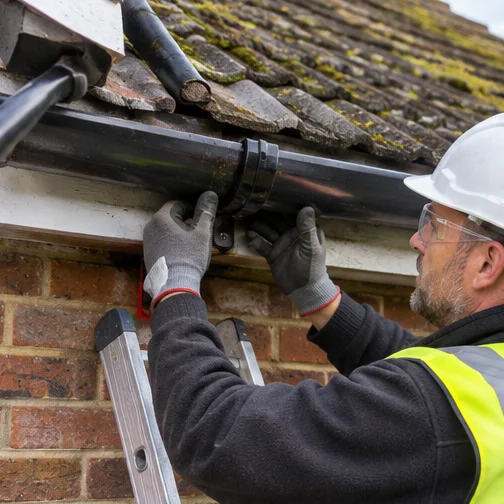
Water may land on a projection and drip from its outer edge, even if it left the gutter farther up or to the side. Tell us if it first appears near a seam, across a run or at a corner. We look along accessible gutters with a pole camera to see where leaves, silt or moss have collected and to check the visible opening into the downpipe. We then vacuum the reachable lengths. After clearance, we inspect the channel again and describe visible fitting problems. If water still comes from a gap or the gutter is out of position, we can discuss a separate repair enquiry.
A landlord, managing agent or business may use different names for the same entrance. Give us a reference the person on site will recognise, such as the side door beside a yard or the entrance to the flats above the frontage. Ask them to show us which outlet or roof level you want checked. If you have photographs, give them a copy with the locations identified. When more than one business uses a yard, tell us which occupier has agreed to access. A clear reference also helps when explaining what we could see after the visit and where any defect was visible.
Questions about Brixton visits
What if rain falls over an entrance used by more than one business?
Give the exact entrance and describe how each occupier uses it. Identify where water first appears and who can agree the working area. A photograph of the whole frontage can show where the gutter sits above the entrance.
Can a rear service route be used instead of the front?
It depends on which roof edge can be reached from the yard. Describe the agreed route and any cover or projection above it. We can discuss the available positions for the front and rear separately.
What does water on a low canopy tell you about the roof above?
It can show where runoff reaches the canopy. A pipe or upper gutter may feed it, or the canopy may collect rain independently. Show both levels and record where the first spill appears.
Can the gutter be clear while the pipe below leaks?
Yes. A visible joint or support can have a defect while the upper channel continues to drain. Record where water appears and whether the base of the pipe also discharges. An enclosed section may need separate assessment.
Should a shop tenant mention earlier work on the awning?
Yes, if the work changed access, the position of the canopy or a visible pipe. Give the date and describe what changed. A wider photograph can show how the current arrangement sits below the gutter.
How can an occupier report a new drip after clearance?
Give the date, the first wet point and the closest fixed feature. Use the same roof reference as the clearance record if the symptom is in the original area. If it appears somewhere else, describe that location separately.