
Gutter Cleaning Fulham
- Book the front, rear or a separate bay run
- Tell us if the rear gutter sits above glass
- Describe where the pipe empties in the garden

Start with the front and back of the house
A Fulham terrace often presents two entirely different enquiries. At the front you can usually describe the roof edge from the street, but the rear may be approached only through the house or around a side return. We ask about each side separately so the booking covers the gutter runs you want cleared. Mention a bay or porch if it has a smaller gutter. The lower roof may take water from the main pipe, or it may have its own outlet that needs attention for a different reason.
The council’s Crabtree character profile records Victorian and Edwardian residential terraces and a mix of uses along Fulham Palace Road. That is useful context for the kinds of access questions we ask. A terraced home can have little space beyond a boundary, while a shop can need a different arrangement at the front door. We establish the access for your building rather than treating the area description as a specification. Give us a full postcode and say whether the affected elevation is at the street, garden or a shared yard.
Make one plan for the outside of the property
An enquiry about gutters can sit alongside other work without every job being appropriate on the same day. If the gutter is spilling onto a patio, deal with the route of the water before spending time on green growth below it. If branches brush against the eaves, establish which branches are involved and discuss the tree separately. A request for window cleaning should distinguish the panes above the extension from those that are straightforward to reach at the front.
If you share a rear passage, agree who can open it and when we can use it. For a rental property, tell us who will meet us and who can approve any additional work. With a regular maintenance enquiry, identify the independent runs you want included rather than describing the whole building as one gutter. Where we flag a restriction or visible fault, keep a note against the front, bay or rear extension so the next visit can start with the right part of the property.

Over a side return or conservatory
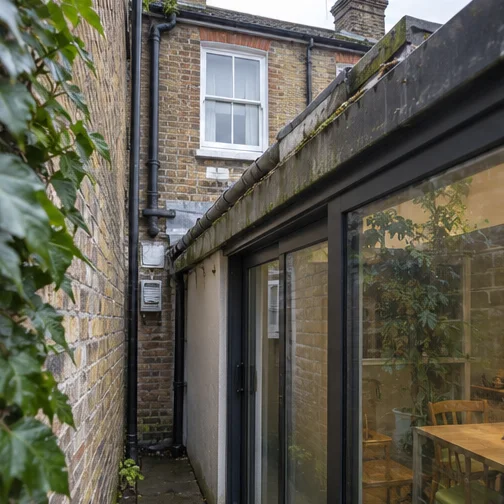
A gutter that overhangs glass needs a position from which the cleaning head can be guided past the edge of the lower roof. Reaching upwards from directly below may be impossible. We look at the garden, side path and any available approach that avoids putting weight on the lower structure. A short distance on a plan can be misleading if there is a fence, canopy or change of level between the working position and the gutter.
Tell us if your rear access is through the kitchen or an adjoining property. We can discuss the route before bringing the vacuum and extension sections around. A clear view of the main roofline and the roof below it is more useful than a close photograph of the blockage. If one section remains inaccessible, we explain which part it is and what would need to change before we could consider reaching it.
Describe each side of the property
| Roof area | Access question | Useful detail |
|---|---|---|
| Main front run | Room before the boundary railing? | Photo from across the frontage |
| Bay or porch | Does it drain independently? | Position of the short outlet |
| Garden elevation | Is there glass below the eaves? | Route through house or side passage |
Follow the visit from street to garden
1
Street side
Identify the main run and the independent bay.
2
Garden side
Find an approach beyond the side return or glass roof.
3
Ground level
Check where the downpipe is meant to empty.
Use the vacuum where it suits the building
We use a high-reach gutter vacuum when a stable ground position and usable angle allow the nozzle to reach the run. It carries leaves, moss and silt down to the collection unit, reducing the amount of material that needs to be handled beside the roof edge. A camera can help us see the inner channel near an outlet or behind a higher lip. We can also consider manual removal where that makes sense and access is suitable.
The length of the visible gutter alone does not tell us how long the visit will take. A short gutter above glass may need more assessment than a longer one with a clear path below it. Tell us about low planting, bins, outdoor furniture and gates around the working area. It is useful to know whether those are permanent or can be moved before the visit. We discuss the sections that can be cleared and confirm what else would need a separate arrangement.

Follow the downpipe to the garden
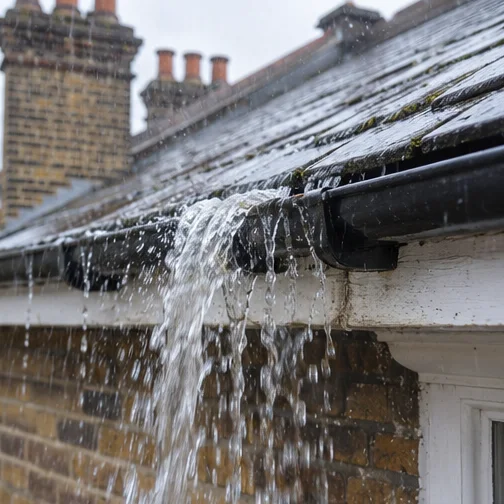
When a pipe ends over a gully, look at what you can safely see when rain is falling. If the gully fills first, water may be held up beyond the gutter system. If it stays dry while water spills overhead, the problem may be at the outlet or accessible pipe. We use that distinction to decide which sections to assess on the visit. A water butt or diverter can make the route less obvious from the ground, so identify where the pipe changes direction and which opening is visible.
Small extension gutters can be particularly affected by debris travelling down from an upper roof. We clear the accessible channel, remove material around the outlet and check the discharge route that can be reached. A cleared lower gutter may still be receiving water from an upper pipe that spills against a wall. If that happens, the right follow-up is to describe the connection between the two levels, so we can separate what has been cleaned from the part that still needs attention.
Read the water at garden level
| What you see | Where we start looking |
|---|---|
| Dry gully and spilling eaves | Accessible gutter outlet and downpipe entrance |
| Full gully with pipe discharging | The connection beyond the rainwater pipe |
| Water beside a diverter | The visible connection and route to the butt |
Turn a wet patch into a useful description
A streak beneath a bay is useful information when you can connect it to the point where water starts. A drip from the bay gutter can be separate from the main gutter overflow farther up the house. Mention which level wets first, if you have observed it from a safe position. Water escaping behind the gutter may leave a different pattern from water falling over the front. It can also run down a pipe or sill before reaching the patch you see from inside.
If we find a split joint, loose connection or section that is holding water after clearance, we can discuss the visible repair issue. The service clears the accessible rainwater route and helps identify what can be seen of its condition. A wet wall that keeps changing after the gutter is flowing may need another assessment. We can explain the gutter findings so you can pass on a useful account without assuming that one visit has identified every source of damp.
Book the front or rear run
Mention the bay and rear roof separately if both need a check.
Questions from terrace owners
Can you include a bay even if the main run is clear?
Yes. Tell us about the bay when you enquire. Its gutter may have an independent outlet and a different working position from the main frontage, so it helps to name it separately.
Does a side return always block access to the rear?
The shape of the extension and room in the garden matter. We consider whether there is a usable angle from another point without relying on the extension roof.
Should I mention a pipe that feeds my water butt?
Identify the diverter and the location of the butt. It helps us understand where water should discharge and which visible connection needs looking at when the accessible run is checked.
What can I send if the leak only appears in heavy rain?
A short clip taken from a safe position can show which roof level spills first. Include a wider view in dry weather so we can identify the bay, wall and downpipe.
Can the visit depend on a neighbour opening a gate?
Tell us which gate is shared and who can arrange access. The booking should allow for that route and identify someone who can confirm it on the day.
Will a gutter visit remove staining on the patio below?
The gutter work deals with the route of rainwater. A mark or growth on paving may need a separate surface assessment. Deal with the repeated discharge first if that is what keeps wetting the patio.