
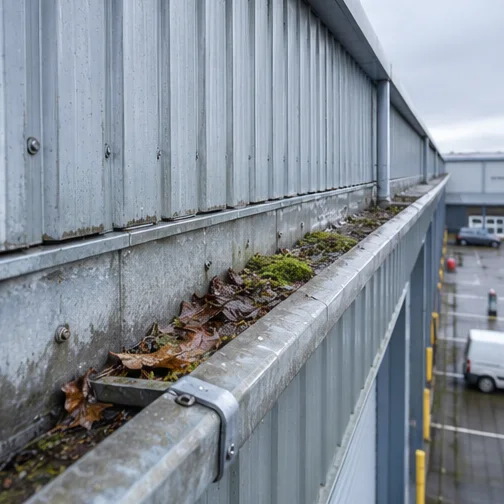
A maintenance record for gutters and downpipes
- Keep a useful record after the visit
- Identify every independent run
- Agree responsibilities in shared buildings
A handover that is useful next year
Make each inspection more useful by recording what you can see, where the water goes and which sections have been cleared previously.
Keep a row for each run and outlet, along with the property entrance or elevation it belongs to. Record what could be inspected, where access was restricted and who holds the keys or permissions for the next visit. A recurring overflow recorded against the same outlet makes a better maintenance discussion than several entries that say only that the gutter was cleaned.
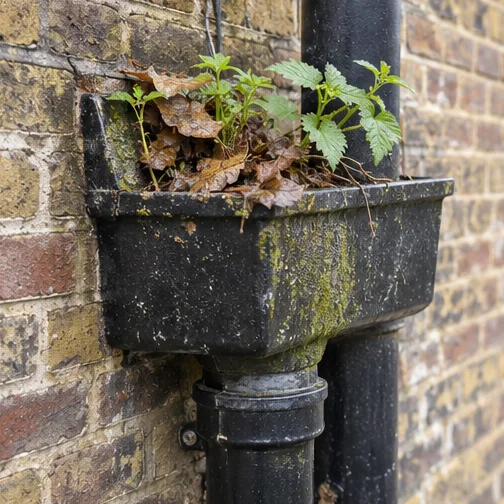
What to look for
Keep a useful record after the visit
It helps to record which sections were cleared, which outlets were checked and where there was an access restriction. The next time you see a spill, compare its location with that record. A different elevation may be an independent problem, while the same corner repeatedly overflowing can point to a recurring source of debris or a visible defect worth discussing. For a shared building, keep the notes where the next person responsible for booking can find them. A short record with a date, elevation and observation is often more useful than a vague entry that says the gutter was cleaned.
Identify every independent run
A house with a bay, porch and rear extension may have four short gutter runs as well as its main channels. The small runs may connect to the main downpipe, or they may discharge separately. One clean-looking roofline does not tell you what is happening on the lower levels. Use landmarks such as the kitchen door, bay or shared passage when you describe the building. If a converted property has a common rainwater system, find out which runs are shared and who can agree access. That makes it easier to describe which gutter is causing the problem and which work belongs in a booking.
Agree responsibilities in shared buildings
In a converted house or apartment building, the person who sees a leak may not be the person who can approve roofline work. Identify the property manager or other responsible contact and share the location of the problem. A photograph labelled with the entrance, elevation or flat position makes it easier to distinguish common guttering from a small separate run. Agree who can open gates, contact residents or explain where a vehicle can stop. These arrangements matter for the visit even when the obstruction itself turns out to be easy to clear.
Write down what was accessible on the day
A maintenance record should say which parts could be seen or reached. If the front was cleared but a rear gutter above glass could not be approached, put both facts in the record. Add a permanent landmark to each line so someone booking the next visit can locate it. This is more useful than a single tick against the whole property.
A practical check before booking
Keep a useful record after the visit
Start with the first visible sign and note where on the property it appears.
A handover that is useful next year
Use the example above to decide what details are worth recording for your own property.
Choose the next assessment
Use the table to decide what to describe when you speak to the relevant service.
| Observe | Record | Discuss |
|---|---|---|
| Position | The elevation, surface or part of the system affected | Which area needs assessment first |
| Timing | When the problem appears and what makes it worse | What can be checked during a visit |
| Access | How the area can be reached and who can open it | Which parts are accessible and what may need separate work |
The outlet is a separate checkpoint
The outlet is where the open gutter connects to the downpipe. A blockage there can make the channel fill even when most of the run is free of leaves. The visible sign can be a concentrated spill at the corner or a hopper that fills without discharging. The point that overflows is useful to report, but the obstruction might sit slightly upstream or within an accessible bend. If a pipe joins a water butt, note the position of its diverter. It helps to distinguish the parts of the system that are visible from sections that disappear behind a wall or beneath the ground.
Follow the downpipe to ground level
Rainwater has another journey after leaving the roof. Some pipes terminate above an open gully, while others feed a water butt or go directly into a drain. A gully that is already full can make a downpipe problem look like a roofline blockage. Paving that slopes towards a doorway can also carry water from another part of the property. From a safe position, note whether water backs up at ground level, escapes from a pipe connection or never reaches the outlet at all. These are different observations, and a gutter visit may not resolve a problem downstream of the rainwater pipe.
Use a wet-weather observation and a dry-weather check
Heavy rain shows how the system behaves under load. Once conditions settle, a second look from the ground can reveal the position of brackets, staining, slipped fittings or debris visible over the edge. These two observations answer different questions. The wet view shows where water travels; the dry view may show how the gutter is assembled and which part deserves attention. A short video from ground level can be particularly useful when the spill disappears before a visit. Include a wider view so the corner, downpipe and affected wall can be identified later.
Overflow and a leaking joint leave different clues
Water spilling over a broad stretch during a downpour often suggests the channel has filled or the run cannot discharge as quickly as it receives water. A concentrated drip from a fitting can suggest a different issue, especially if it continues after the heaviest rain has passed. Neither sign is conclusive on its own. A blocked outlet can hold water against a weak joint and make both symptoms appear together. Record where the water first leaves the gutter and whether it emerges from the edge, a seam or behind the fascia. That observation is more useful than the location of the puddle below.
Plan what happens next
Consider branches and seasonal debris together
Overhanging branches can drop material into a gutter, cast shade over paths and sometimes touch the roofline. These effects call for different responses. Clearing a gutter restores an open route for water, while work on a branch changes how it interacts with the building. An overhanging branch should be assessed in its setting, particularly near a boundary, a glass roof or other property. Do not assume the tree needs heavy pruning just because leaves are collecting below it. Describe which branches cause concern and check who can authorise any work before arranging it.
Plan around the building, not just the calendar
Roof pitch, nearby trees and the amount of moss on the tiles all affect how quickly material accumulates. Two buildings on the same road may therefore need different intervals. A gutter below a deciduous tree may collect most of its leaves over a few weeks, while one below a mossy roof can receive debris after successive wet spells. Note when the gutter last overflowed and what was happening around the property at the time. That record is a better starting point for a maintenance interval than assuming every roofline needs the same visit at the same time of year.
Make the first enquiry specific
Give the full postcode, property type and affected elevation. For gutters, say whether the problem is at a joint, outlet, hopper or the wall below. For exterior work, describe the material or tree and mention access restrictions. A wider photo from a safe position is useful because it shows where the work sits in relation to doors, gates and paths. A close-up alone may not show the height or approach. For shared premises, include the person who can agree access and identify the section to be worked on. Avoid assuming that all parts of a property will be included by default.
Record the result separately from the next recommendation
A visit can clear an outlet and also identify a loose bracket. Keep the clearance in one line and the visible repair issue in another. During the next rain, note whether the original spill has changed and whether the bracket still needs a separate assessment. This simple distinction is particularly useful if one person manages cleaning and someone else approves repairs.