
Gutter Cleaning Southend
- Give the full SE6 address for the enquiry
- Identify which roof feeds the lower channel
- Describe the usable route beside the garden
Start with the right Southend address
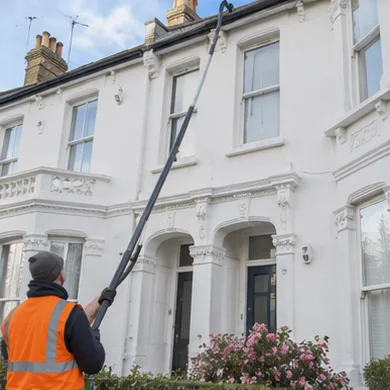
This page concerns Southend in the SE6 area of Lewisham. Lewisham Council identifies access to Southend Park from Meadowview Road and Southend Lane. Use the full postcode when getting in touch, particularly if the address or the name of the area could be mistaken for somewhere else. The public road gives us a reference for the location. What we need for the gutter is the roof edge involved and the private route that an authorised person can open for the visit.
When you describe a house, say whether the trouble is above the front wall, the side passage or the rear addition. If you see it by a garden boundary, give us a photograph showing the upper roof and any lower channel beside it. The nearest downpipe may belong to a different part of the roof. A wide photograph taken from a safe position helps identify the roof edge and where the water first leaves it.

Confirm a garden approach
| Possible route | Detail to give us | Why it matters |
|---|---|---|
| Side gate | Who can open it and what is beyond | Pole and vacuum need a suitable position |
| Through the house | Available door to the garden | Equipment route can be discussed in advance |
| Adjacent shared ground | Permission and access contact | Scope depends on the available working angle |

Remove reachable debris and inspect the end of the run
Where height and access allow, we use a gutter vacuum and reach poles to clear the accessible length. Leaves and silt can collect at a return or narrow the opening into a downpipe. We check the reachable opening and use a pole camera where the angle allows a useful view of the channel. The amount visible from one position can differ from what can be seen around the next corner. We explain what could be reached rather than assuming the whole elevation is clear.
If a pipe ends at an open gully, tell us whether you can see it discharge in rain. If it disappears into the ground or behind a cover, describe the last visible part. A concealed blockage cannot be confirmed from a clear gutter alone. Where the accessible gutter and inlet can be checked but the symptom continues, the remaining pipework or drainage connection may need separate investigation. Keep the visible result and the suspected cause distinct when passing the report on.
Describe the garden or side route the equipment will use
At a home, a locked gate, steps or a narrow passage around a lower roof can affect where the vacuum can stand and the angle at which a pole approaches the gutter. A photograph from the lawn showing the roofline may not show how the equipment gets there. Include a view of the side route and explain which part is available to use. If access is through the house, tell us who will be there and which door leads out to the affected side.
A hedge, branch or fence beside the wall can restrict the approach even if the roof height is otherwise suitable. Tell us if a different position is available and who can give permission to use it. We can then discuss whether the front and rear can be reached on the same visit. For shared property, identify the person who can open the route and the contact who can agree work to the roof edge. The two roles may belong to different people.
Follow water across roof levels
| Where it appears | What to identify | What to show |
|---|---|---|
| On top of a porch | End of any higher pipe | Both roof edges and the pipe outlet |
| Below an extension gutter | Its own channel and outlet | Side view showing where it drains |
| Beside the rear wall | Last exposed pipe connection | Where the pipe goes out of sight |
Roof zone, discharge and handover
1
Name both levels
Distinguish the upper eaves from the lower addition.
2
Locate the exit
Identify the last visible outlet or pipe.
3
Keep the result with its reference
Note which section was reached and whether a fitting still drips.
Look for a second source of water above the lower roof
A conservatory, porch or rear extension can have a small gutter that receives water from its own roof and a discharge from a higher pipe. If you notice a spill below the extension, look for a visible pipe that ends above it. You may see water enter the lower run faster than it can leave, or find that it misses the channel and lands against the wall. Explain which of those you actually observed. A wet wall at the bottom does not identify the outlet at the top.
Give each level a separate name. A useful description might be the main rear gutter above the upstairs windows and the short channel along the garden doors. Tell us whether you want both checked or whether the higher roof only needs to be considered because it may be feeding the lower one. If either has a separate outlet, show its visible position. That detail helps us confirm which lengths can be reached and whether the suspected restriction is in the same system.

Note the fitting that remains wet after clearance
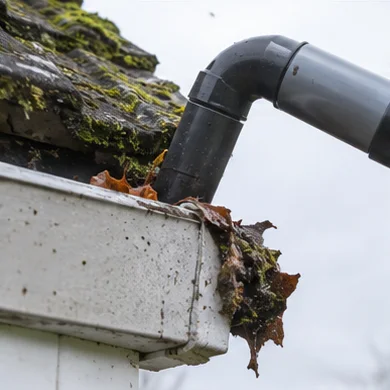
A channel full of material can spill over a join without the join itself being the source of the blockage. After removal, we can look for visible defects, including a displaced fitting or a gap around a connection. If the seam still drips, note its location in relation to a door or downpipe. That reference helps if a repair needs to be considered. Where the fitting cannot be seen from the agreed position, the report should state that it remains out of view.
A mark on brickwork may outlast the weather that caused it. When the next rain comes, observe whether water still starts at the same place. The wet mark may follow an old route even when the new drip starts elsewhere. If you have a record of earlier clearance, use the same roof references so we can compare what was reached with what is now being reported. A new symptom at the lower roof should be described on its own terms.
Put the scope and access instructions in the enquiry
Give the Southend postcode, the side of the building affected and the nearest visible outlet. If water crosses a lower roof on the way to the ground, explain where it begins and whether the lower channel has a separate drain. If the approach involves a rear gate or side passage, include who can open it and what space will be available for the equipment. We can discuss a booking based on the actual run and working position.
At a business or divided building, identify which occupier saw the problem and who can approve work to the shared roof. A dry-weather picture of the connections and a short description of what happened in rain can be useful together. If one run has already been cleaned, say which part was included and what was not reached. This lets us discuss the outstanding symptom without confusing it with a separate channel or pipe.
Discuss a gutter visit in Southend
Give the full SE6 address for the enquiry
Questions about Southend visits
Which Southend does the page refer to?
It refers to Southend in Lewisham. Send the full postcode and street address with the roofline details so the location can be confirmed.
How can I show a pipe missing the extension gutter?
From a safe position, show its end and where the water lands. Tell us whether the lower gutter itself also overflows during the same rain.
What if a garden hedge hides the approach in my roof photograph?
Send a second picture along the side of the house showing the ground and the available position. Tell us whether another authorised approach is possible.
Does an open gully show whether the outlet is still blocked?
It gives a place to observe visible discharge, but it does not show the whole pipe. Give the location of the gully and say what happened at the upper channel during the same shower.
How can I describe a loose corner fitting above the back doors?
Name the doors and show the corner relative to the nearest downpipe. If the section was cleared before, tell us which part was reached and what happened in the next rain.
Can a neighbour identify the spill without arranging access?
They can describe what they saw and from where. Ask the booking contact to confirm the route and authority to reach the roof edge separately.